Frame profiles & chambers
The glass gets the attention, but the frame it sits in decides how well the whole window insulates, how rigid it stays over decades, and how it looks. On a uPVC quote, two numbers tell most of the story: chamber count and profile depth.
What a chamber is
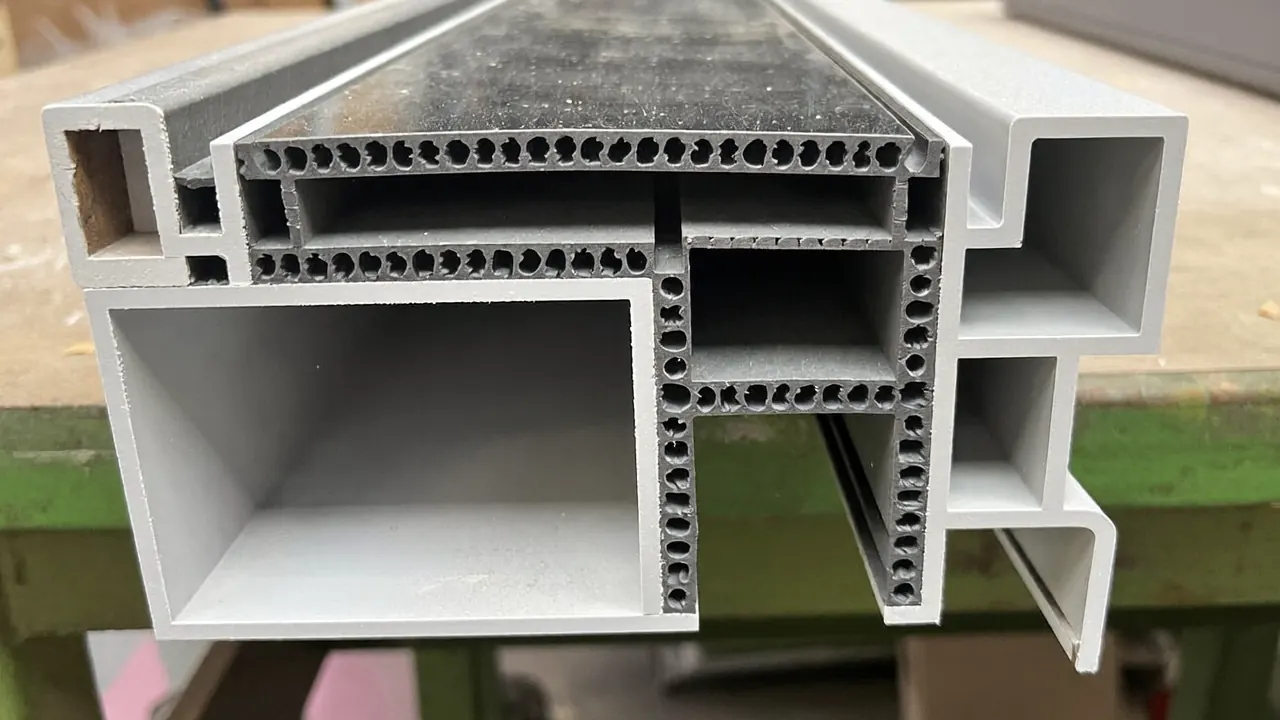
A uPVC frame is not solid plastic. In cross-section it is divided into a series of sealed hollow compartments called chambers. Each pocket of trapped, still air resists heat transfer — the same principle that makes double glazing work. More chambers generally means better thermal insulation and a stiffer, more stable frame.
Common profiles run from around three chambers on budget systems up to five, six or more on premium ones. The jump from a basic to a multi-chamber profile can noticeably improve the whole-window U-value, because the frame is often the weakest thermal part of the unit once you have a good sealed glass unit.
Profile depth and the story it tells
Depth — how far the frame sits front to back — matters too. A deeper profile has room for more chambers and for a thicker or triple-glazed sealed unit. It also tends to be more rigid, which helps on larger windows and doors. A shallow, narrow profile may look neat but can limit both glazing options and strength.
| Frame feature | What it affects | What to look for |
|---|---|---|
| Chamber count | Insulation and rigidity | Five or more on a premium spec |
| Profile depth | Glazing options, strength | Deep enough for your chosen unit |
| Reinforcement | Long-term stability | Steel or composite where needed |
| Weld and finish | Appearance, durability | Clean corners, even seals |
Get quotes with the frame spec detailed
We match you with vetted local installers who state chamber count and reinforcement. Free and no-obligation, subject to eligibility and a home survey.
Generate my quotes →Reinforcement and strength
Chambers deliver insulation; reinforcement delivers strength. Larger windows, and any that carry a heavy triple-glazed unit, need steel or composite reinforcement inside the profile to resist bowing and to support locking hardware. This is also part of what makes a frame able to meet the PAS 24 security standard, because a frame that flexes is easier to lever open. A good installer specifies reinforcement based on the size and use of each opening, not as a blanket option.
Finish and longevity
Modern uPVC comes in far more than white — woodgrain foils, greys and heritage colours are all common, applied as durable foils rather than paint. Look for clean welded corners and consistent seals, which signal quality manufacture. The frame material is also where uPVC, timber and aluminium diverge most, so it is worth seeing how they stack up when you compare glazing types side by side.
When you weigh up quotes, ask each installer for the profile name, chamber count and reinforcement approach. If you are replacing every window, it pays to think about the frames as a set — planning a full new-windows project keeps the look and spec consistent. For the fundamentals, head back to window specifications explained.
Compare frame specs like a pro
Enter your details once and receive free, no-obligation quotes from accredited installers. Surveyors in many areas have appointments this month.
Generate my quotes →